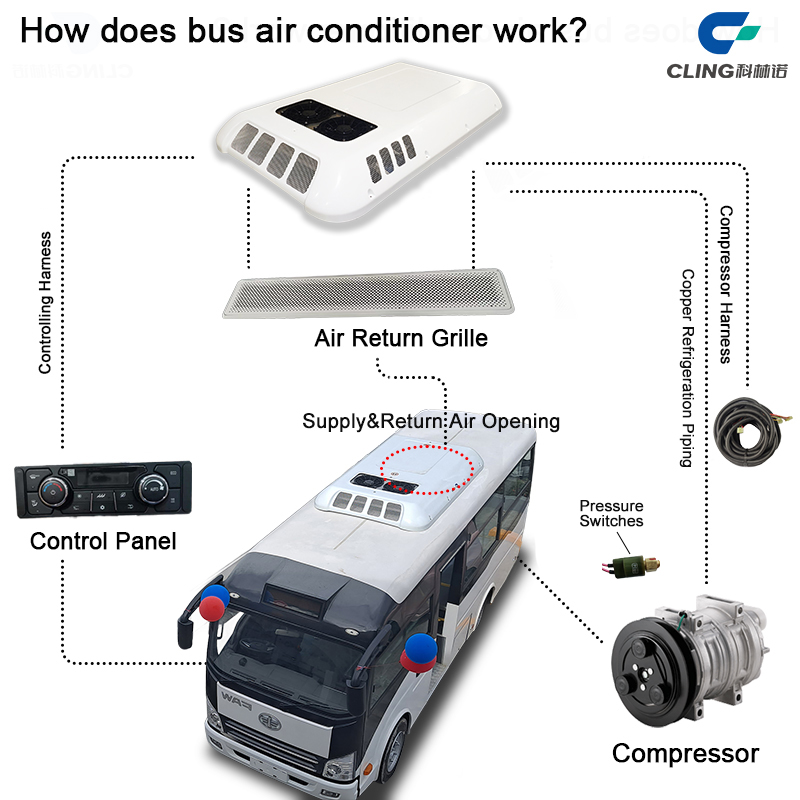
After passing through the condenser, the cooled liquid refrigerant passes through an expansion device (expansion valve or throttle tube) that regulates the flow of refrigerant into the evaporator coil. Inside the evaporator, the warm cabin air comes into evaporator and meets the cooled refrigerant, causing it to absorb quantity of heat. At the same time, moisture air condenses on the cold surface of the evaporator, creating a dehumidifying effect inside the bus. After absorbing enough heat, the refrigerant turns back into a low-pressure vapor, returning to the compressor to repeat the cycle.
Expansion Valve Or Throttle Tube
Both devices serve a similar purpose; they control the amount of liquid refrigerant entering the evaporator.
However, the methods of operation are slightly different.
The expansion valve uses a diaphragm controlled by a bulb filled with refrigerant from the evaporator outlet. As the temperature at the end of the evaporator drops, less refrigerant flows through the valve, maintaining an optimal level of superheat within the evaporator.
The throttle tube maintains a constant restriction regardless of changing operating conditions, relying on a metering rod to adjust the flow rate based on the pressure difference across the throttle tube. While a throttle tube is a simpler design, it can be less efficient than an expansion valve under varying load conditions.
Refrigerants
Refrigerants are critical to the operation of any air conditioning system. They have unique properties that allow them to easily change phase at different temperatures and pressures. Older systems used R-12 (Freon), but it has been phased out due to environmental concerns. Modern systems primarily use R-134a, although newer generations of refrigerants with lower global warming potential, such as R-407C and R-410A, are becoming more common.
Electrical Controls
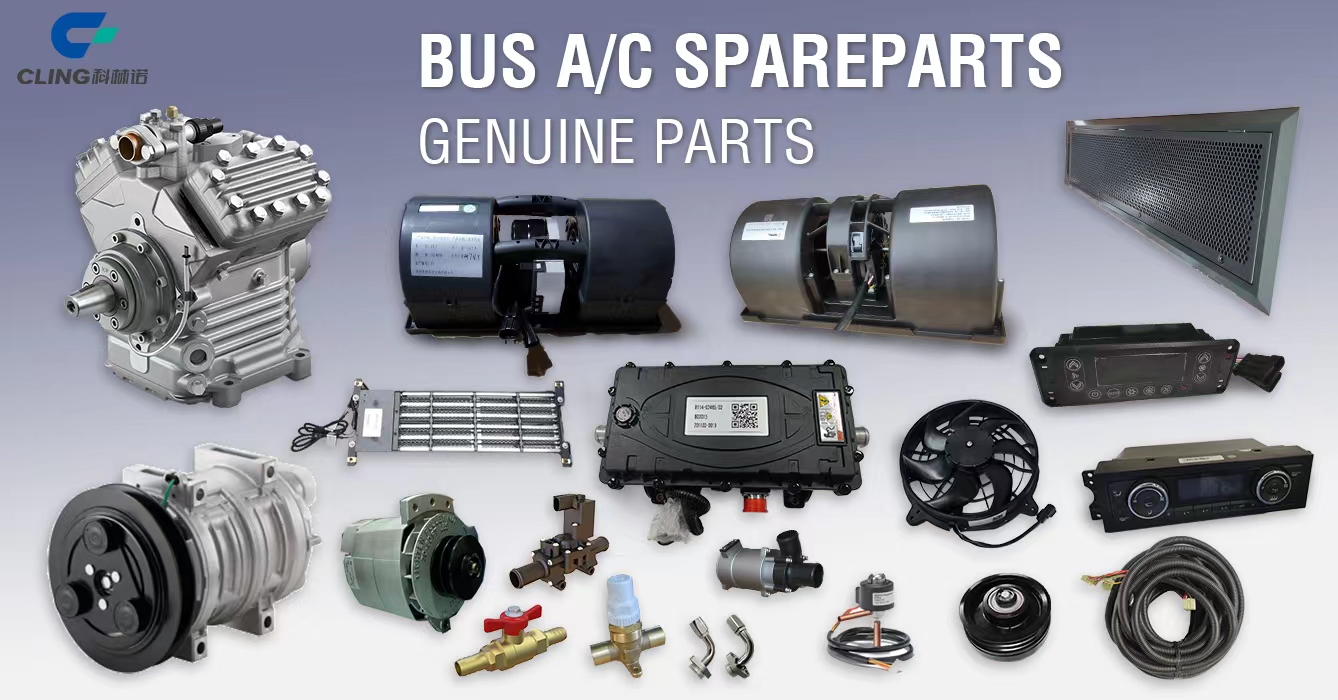
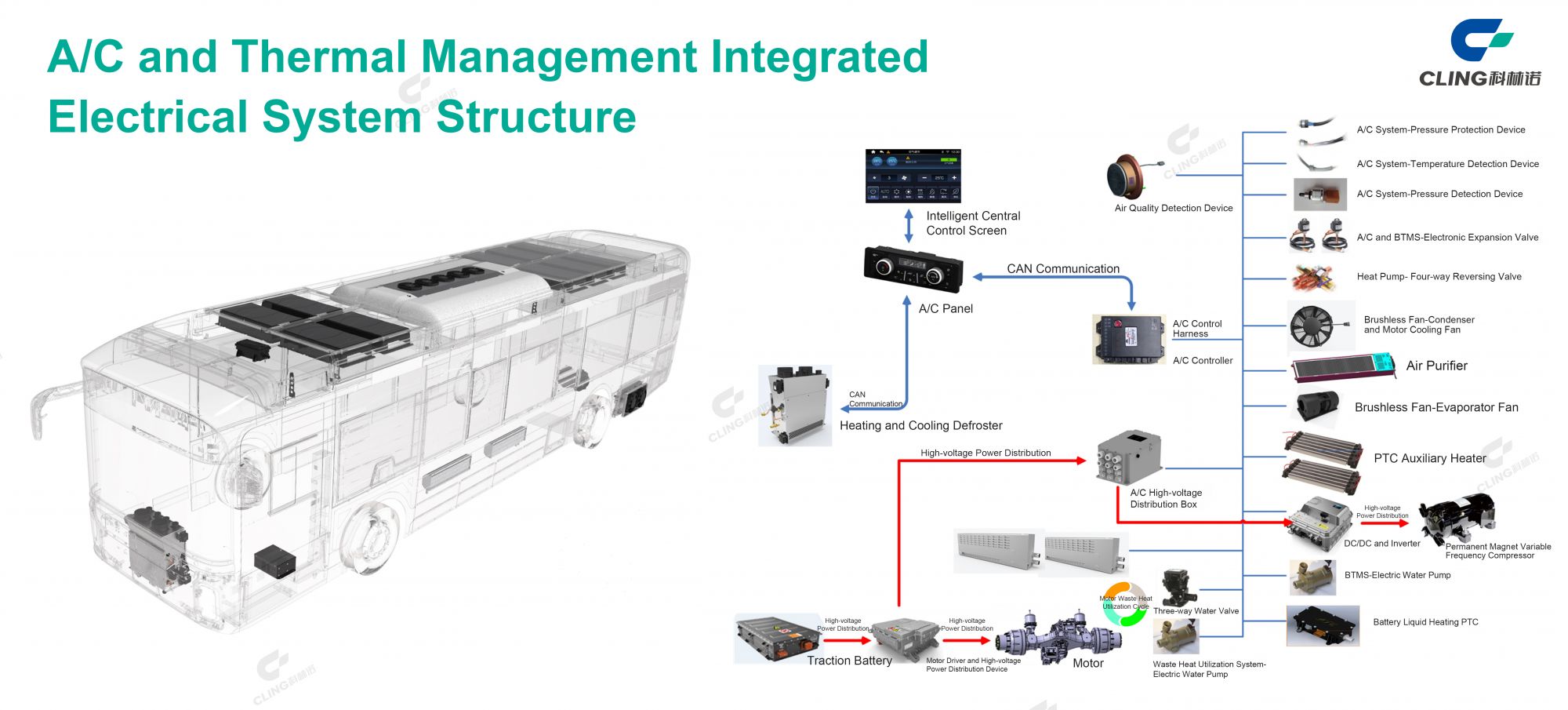
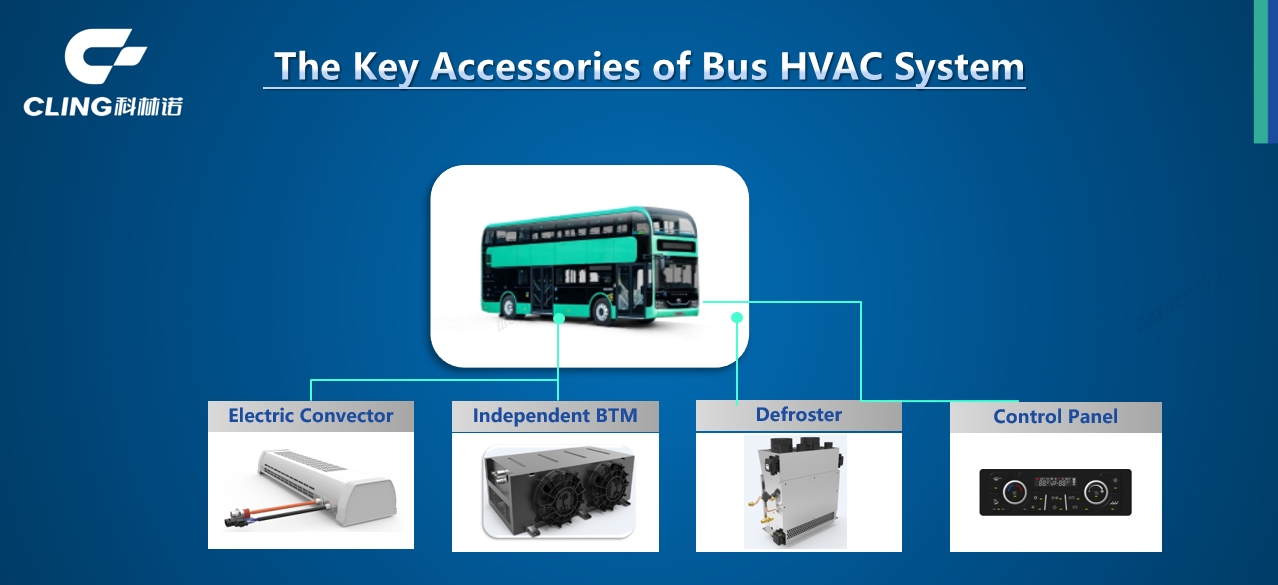
A variety of sensors and switches monitor system performance and ensure proper operation. The most critical of these are the temperature sensor, which measures the temperature inside the vehicle and sends feedback to the control module, and the pressure switch, which prevents the system from over-pressurizing. In addition, the climate control panel allows passengers to select desired settings such as fan speed, mode (e.g., floor, dashboard, defrost), and temperature. These inputs are processed by the electronic control unit (ECU) and the operation is managed accordingly.




 China
China English
 French
 Spanish
 Russian