-
Products
-
Engine Bus Air Conditioner
Engine Bus Air Conditioner

-
E-Bus Air Conditioner
E-Bus Air Conditioner

-
BTM System
BTM System

-
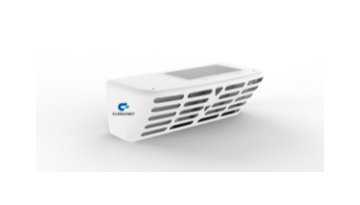
Refrigeration Unit
Refrigeration Unit
-
Defroster
Defroster
-
Integrated Thermal Management System & Heat Pump Product
Integrated Thermal Management System & Heat Pump Product

-
Accessory
Accessory
.jpg)
-
Engine Bus Air Conditioner
- About Us
- Support
- Contact Us








The core trend in the future development of refrigerants for bus air conditioning: the refrigerants used in bus air conditioning will shift entirely from high global warming potential (GWP) synthetic refrigerants to environmentally friendly alternatives with low or even ultra-low GWP. This change is primarily driven by two factors:
1. Global climate conventions: such as the Kigali Amendments aimed at phasing out hydrofluorocarbons (HFCs).
2. Regional environmental regulations: exemplified by the EU's F-Gas Regulation.
| Development Stage | Representative Refrigerant | Global Warming Potential (GWP) | Key Characteristics and Trends | Current Application Status in Buses |
| Current Mainstream Refrigerants: | R134a | 1430 | Facing phase-out. Supply in the EU market has been strictly limited, and China is also gradually reducing its use. | Still widely used, but soon to be replaced. |
| Short-term transition: | R1234yf | <1 | With extremely low GWP, it can be used as a direct alternative. However, due to its synthetic nature and flammability, its application in commercial vehicles is relatively cautious. | Relevant national standards have listed it as one of the optional refrigerants. |
| Future Mainstream: | R290 | ~3 | The Rise of Natural Refrigerants. Environmentally friendly and highly efficient, especially suitable for hot climates and heat pump systems. Several international suppliers have launched mass production solutions for bus air conditioning based on R290. | Mass-produced products already exist, and this is a key area for future development. |
| R744 (CO₂) | 1 | The Rise of Natural Working Fluids. Environmentally friendly, and their thermophysical properties make them extremely efficient as heat pumps in cold climates. Some European city buses already have application examples. | Mature products and applications already exist. |
Against this backdrop, the technological roadmap for bus air conditioning refrigerants will exhibit the following clear evolutionary trends:
Besides the direct replacement of refrigerants, the future of bus air conditioning systems also presents two other important trends:
1. System architecture innovation: To adapt to the characteristics of new refrigerants and improve energy efficiency, the air conditioning system itself is undergoing significant transformation. For example, adopting direct cooling systems allows the refrigerant to directly circulate and cool the air, eliminating the need for intermediate heat exchange media and significantly improving energy efficiency. Simultaneously, intelligent control and cloud services are being integrated to reduce operating costs through predictive maintenance and remote monitoring.
2. Existing market transformation: New regulations not only affect new vehicles but also pose challenges to the existing large bus fleet. Currently, existing technical solutions have achieved a dual transformation of traditional diesel bus refrigeration systems—"oil-to-electricity" and "environmentally friendly refrigerant"—by adding generators and electric compressors, providing a feasible upgrade path for the existing market.
In general, the future of bus air conditioning refrigerants lies in natural refrigerants, and technological evolution will revolve around the two core principles of "more environmentally friendly" and "more intelligent."


Products
 Youtube
 Facebook
 Linkedin
 Instagram
Copyright © 2016 Zhengzhou Kelin Motor Vehicle Air Conditioning Co., Ltd. All rights reserved. Support:
Coverweb
Get A Free Quote!
x